
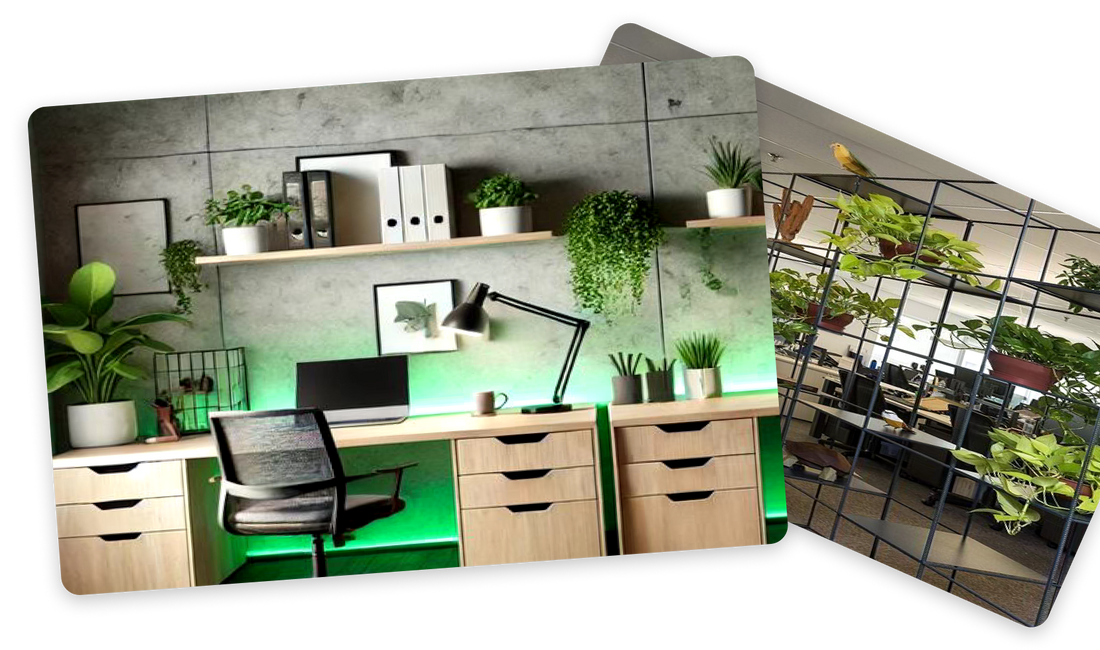
Have you ever noticed how a green plant can transform an environment? 🌳
It’s not just about aesthetics: plants in the workplace offer a wide range of benefits that go far beyond visual beauty.
Whether you work in an office, home studio or shared space, integrating nature into your work environment can have positive effects on productivity, health and general well-being. 🧘♂️💼
Benefits of Plants in the Office 🏢
Adding plants to the workplace is not just a decorative trend, but a smart choice to improve the quality of working life. Some of the main benefits:
Improving Air Quality 🌬️ Plants act as natural filters, absorbing carbon dioxide (CO ) and releasing oxygen. Some plant species, such as sansevieria or pothos, are particularly effective in removing pollutants like formaldehyde, benzene and trichloroethylene from the air 🦠. Cleaner air means less headaches 🤕, less stress and greater concentration.
Stress Reduction 😌 Numerous studies have shown that the presence of plants can reduce levels of stress and anxiety. 🌿 Looking at a green plant or taking care of it can have a calming effect, helping to maintain serenity even on the most demanding days.
Increased Productivity 🚀: Plants not only improve air, but can also increase productivity and creativity. 🌟 A study by the University of Exeter found that people working in offices with plants can be up to 15% more productive than those working in spaces without green.
Moisture Improvement 💧 In air-conditioned environments, the air can become very dry, causing respiratory discomfort and skin irritation. Plants release moisture into the air through a process called perspiration, helping to maintain an optimal level of humidity and improving overall comfort.
The Best Plants for Your Office 🌻
Not all plants are suitable for every type of work environment. Here are some of the most recommended plants for workspaces:
Sansevieria (Mother-in-law’s language) 🌵 Easy to maintain and able to survive in low light conditions, the sansevieria is ideal for offices with little natural light.
Pothos 🌱: Also known as "devil’s plant", it is resistant and able to purify the air from numerous toxins.
Ficus elastica (Ficus robusta) 🌳 This plant is perfect for adding a touch of lush green and requires little maintenance.
Boston fern 🌿: Ideal for improving the humidity of the air, this plant is perfect for air-conditioned environments.
How to Integrate Plants in Your Work Space 🛠️
Strategic Placement 🗺️ Place plants in strategic locations, such as near the desk or in common areas, to maximize their benefits.
Choose Low-maintenance Plants 🌾 If you don’t have a green thumb, opt for plants that require little water and light, such as cactus or aloe vera.
Hanging or Vertical Plants 🌿 If space is limited, consider using hanging plants or green walls to add green without occupying surface.
Conclusion 🌱
Plants are not just a decorative element in our work environment; they are valuable allies to improve air quality, reduce stress and increase productivity. 🌟 Investing in some plants for your office or workspace can make a big difference to your daily well-being and working efficiency. 🌻
So, the next time you think about improving your work environment, don’t forget to add a touch of green! 🌿🌳
Kevin Rica